
2026 Special Report on Production Process and Quality Inspection of Cold-Rolled Precision Seamless S
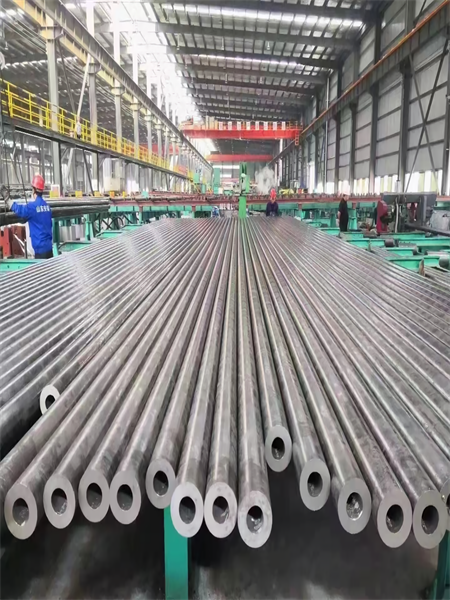
Special Report: Production Process and Quality Inspection of Cold-Rolled Precision Seamless Steel Tubes in 2026
I. Report Overview
This report details the core production process differences between cold-rolled precision seamless steel tubes and hot-rolled and cold-drawn steel tubes. It covers end-to-end process control points, current national and European standard quality inspection specifications, common defect causes, and corrective measures. This guide supports quality inspection, process improvement, and incoming material acceptance in production workshops. The scope includes cold-rolled precision steel tubes made from four mainstream materials: 20#, 45#, 42CrMo,, and Q355B.
II. Core Definitions and Process Differences
1. Product Definition: Cold-rolled precision seamless steel tubes are produced from hot-rolled seamless billets via cold rolling, annealing, finishing, flaw detection, and precision cutting. Outer diameter tolerance is ±0.05mm,, wall thickness tolerance is ±0.08mm,, and surface roughness Ra ≤ 1.6 μm. Dimensional accuracy is significantly higher than that of cold-drawn or standard hot-rolled tubes.
2. Complete Production Process: Incoming hot-rolled tube re-inspection → pickling, phosphating, and saponification → multi-roll cold rolling → vacuum bright annealing → inner and outer wall polishing → cutting → eddy current and ultrasonic dual flaw detection → dimensional inspection → rust prevention and sealing oil treatment → packaging and warehousing
3. Core Process Advantages: Dense grain structure, no weld gaps, resistant to pressure and fatigue, straightness ≤0.5mm/m, — ideal for high-pressure, precision transmission, and sealing applications.
III. Current Quality Inspection Standards
1. Domestic Standard: GB/T 3639-2021 "Cold-drawn or Cold-rolled Precision Seamless Steel Tubes"
2. Export Standards: DIN2391 (German Standard), EN10305-1 (European Standard), ASTM A106/A53 (American Standard)
3. Mandatory Quality Inspection Items: Chemical composition, mechanical properties, dimensional tolerances, surface quality, non-destructive testing, hydraulic burst test
IV. Common Quality Defects: Causes and Corrective Actions
1. Uneven Wall Thickness: Caused by misalignment of cold rolling rolls or excessively thick blank wall. Corrective Measures: Regularly calibrate the rolls and screen for first-grade hot-rolled blanks.
2. Inner Wall Scratches and Peeling: Caused by failure of the phosphating lubricant or wear on cold rolling dies. Corrective Measures: Replace the saponified lubricant monthly and polish or repair the cold rolling dies.
3. Excessive Hardness: Uneven annealing temperature and insufficient holding time; Corrective Measures: Zoned temperature control in the vacuum annealing furnace. Annealing temperature for carbon steel: 720-760°C; Annealing temperature for alloy steel: 820-860°C.
4. Defect Detection: Cracks – Original cracks in the billet or excessive cold rolling reduction rate. Corrective Measures: Pre-inspect billets; limit single-pass cold rolling reduction to ≤35%.
V. 2026 Process Improvement Recommendations
1. Widespread adoption of online laser diameter and thickness measurement equipment replaces manual sampling, raising the dimensional qualification rate to 99.8%.
2. Use an acid-free, eco-friendly pickling process to reduce oxide scale on the pipe surface and enhance corrosion resistance.
3. Add a stress-relief annealing process to alloy steel precision pipes to eliminate internal processing stresses and prevent subsequent deformation and cracking.
VI. Report Conclusion
Core quality control points for cold-rolled precision pipes include billet screening, cold rolling reduction rate parameters, and bright annealing. Mid- to low-end workshops perform only eddy current testing; high-end hydraulic, military, and new energy pipes must undergo both eddy current and ultrasonic testing to meet long-term high-pressure service requirements.